11+ Verbal Reasoning Type 16: Finding the Word That Goes With Both Pairs
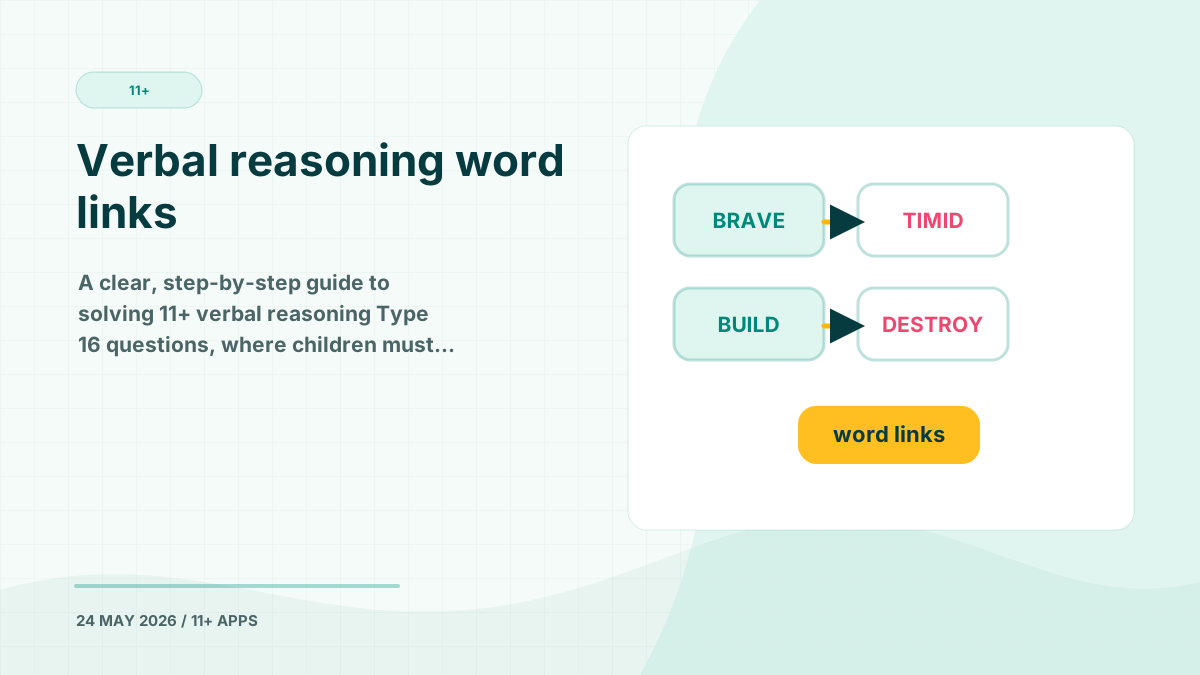
A clear, step-by-step guide to solving 11+ verbal reasoning Type 16 questions, where children must find a single word that links two separate pairs of words.
What Type 16 Questions Ask
Type 16 is one of the trickier verbal reasoning formats your child will meet in the 11+, and it catches out children who rush. The instructions are short but precise: you are given two separate pairs of words, followed by five possible answers, and you must choose the single word that goes equally well with both pairs.
The crucial point — and the one most children miss — is what “goes with” really means. The answer does not have to be a perfect synonym of every word. It simply needs to share a clear relationship of meaning with each pair. The two pairs often pull in slightly different directions, and the right answer is the one word flexible enough to bridge them both.
Did you know? Type 16 questions reward vocabulary breadth far more than speed. A child who knows that a single word can carry two different meanings will spot the answer almost instantly, while a child relying on one fixed definition will get stuck.
A Worked Example
Let’s work through a real example of this question type.
You are given two pairs:
- Pair 1: group, gang
- Pair 2: gather, congregate
And five possible answers: class, hunt, crowd, gaggle, collect.
Your job is to find the one word that links with both pairs. Here is how to test each option in turn:
- class — works with group and gang (you can have a class of pupils), but it does not connect with gather or congregate. Rejected.
- hunt — does not connect with either pair. Rejected.
- crowd — a crowd of people relates to group and gang, and to crowd together relates to gather and congregate. It links with both pairs.
- gaggle — works loosely with group and gang (a gaggle of geese), but not with gather or congregate. Rejected.
- collect — connects with gather and congregate, but not with group or gang. Rejected.
The only word that goes with both pairs is crowd. Notice why it succeeds where the others fail: crowd can act as a noun (a crowd of people) and as a verb (to crowd together). One meaning links to the first pair, the other to the second.
The Method, Step by Step
Once your child understands the underlying trick, the question becomes far more manageable. Teach them this reliable routine:
- Read both pairs and name the link in each. What do group and gang have in common? They are collections of people. What about gather and congregate? They mean to come together. Now you know what the answer must connect to.
- Test every answer against the first pair. Cross out any option that clearly does not fit.
- Test the survivors against the second pair. The answer must satisfy both, so a word that only fits one pair is wrong.
- Look for a word with two meanings. If two options seem to fit, ask whether either word has a second sense — often a noun and a verb — that unlocks the second pair.
- Check all five options before committing. Do not stop at the first word that seems to work; confirm it is the only one that fits both pairs.
Tip: Encourage your child to whisper the answer word into a short phrase with each pair — “a crowd of people” and “to crowd together”. If both phrases sound natural, they have found their answer.
Why the Answer Often Has Two Meanings
This is the heart of Type 16. The two pairs are usually chosen so that no single meaning fits both. The examiner is testing whether your child can recognise that English words frequently carry more than one sense.
In our example, crowd is both a thing (a noun) and an action (a verb). Words like light, fan, match, trip, spring, and bark behave the same way. Children who actively collect these double-meaning words build a huge advantage — not just for Type 16, but for comprehension and other verbal reasoning formats too. This is exactly the kind of word awareness we explore in our guide on antonyms and synonyms, and it sits at the centre of the broader verbal reasoning methods every child should know.
Common Mistakes to Avoid
The table below shows the errors that cost marks on this question type, and how to fix each one.
| Common Mistake | Why It Happens | How to Fix It |
|---|---|---|
| Stopping at the first match | The first option seems to fit one pair | Always test all five against both pairs |
| Demanding an exact synonym | Child thinks the answer must mean the same as every word | Look for a relationship, not an exact match |
| Ignoring second meanings | Only the most common sense of a word is considered | Ask “does this word have another meaning?” |
| Forgetting one of the pairs | Focus drifts to the more obvious pair | Read both pairs first and name each link |
| Rushing under time pressure | Type 16 feels harder, so panic sets in | Practise the routine until it becomes automatic |
Tip: When two options both seem to fit, the answer is almost always the one with a wider range of meanings. Train your child to ask which word is the more flexible of the two.
A Quick Practice Routine
Short, regular sessions work far better than occasional long ones. Here is a light weekly routine that builds the right instincts without overwhelming your child:
| Day | Activity | Time |
|---|---|---|
| Monday | Work through 5 Type 16 questions slowly, naming the link in each pair | 15 mins |
| Tuesday | Collect 5 double-meaning words (noun + verb) into a notebook | 10 mins |
| Wednesday | Re-attempt Monday’s questions, aiming for accuracy | 10 mins |
| Thursday | Mixed verbal reasoning practice, including a few Type 16 | 15 mins |
| Friday | Timed mini-quiz to build speed and confidence | 10 mins |
This kind of structured, technique-led practice pairs naturally with the wider exam strategies in our practical 11+ guide to help your child pass.
Putting It Into Practice
Type 16 questions reward two things above all: a strong vocabulary and a clear, repeatable method. Both can be trained, and the best way to embed them is through focused practice.
Our 11+ Verbal Reasoning Methods & Techniques app is built for exactly this. With 1,050 questions and detailed study notes across 22 topics — including word codes, letter series, and analogies — it teaches your child the underlying technique for each question type rather than leaving them to guess. Once the method is secure, the 11+ Verbal Reasoning Practice Papers app lets them apply it under realistic exam conditions, with 1,920 questions across 24 practice papers covering analogies, comprehension, letter series, number series, and word puzzles.
Together these two apps form a complete learn-then-test cycle for verbal reasoning, and they sit within our wider suite of 8,100+ questions across 7 specialist 11+ apps spanning maths, English, vocabulary, and non-verbal reasoning. Master the method, practise consistently, and Type 16 questions will quickly become some of the most reliable marks your child picks up on exam day.
Frequently Asked Questions
What is a Type 16 verbal reasoning question?
Why is the correct answer often a word with more than one meaning?
How should my child check their answer in these questions?
How can my child get better at these questions?
Related Apps
Start Practising Today
Download our 11+ exam preparation apps and study with 8,190+ practice questions, mock exams, and detailed explanations.