Antonyms and Synonyms: A Guide for the 11+ Vocabulary Section
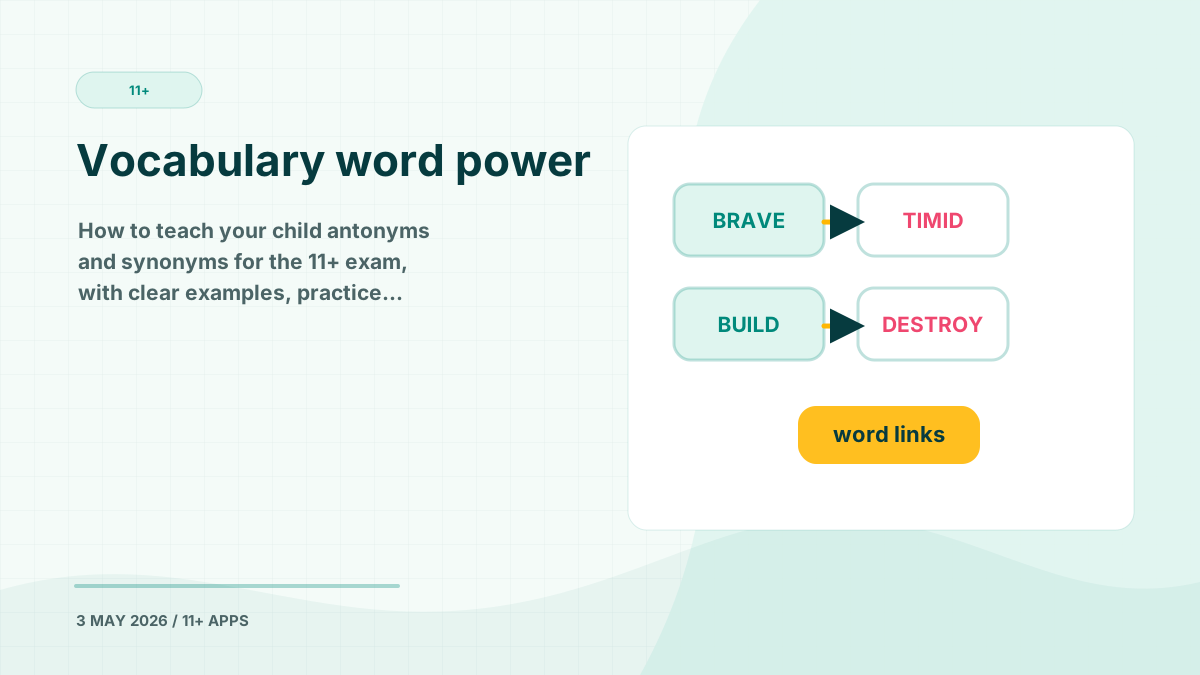
How to teach your child antonyms and synonyms for the 11+ exam, with clear examples, practice strategies and a weekly routine to build word knowledge.
Antonyms and Synonyms: The Basics
Antonyms and synonyms describe the relationship between two words. The rule is simple:
- Antonyms are words with opposite meanings.
- Synonyms are words with similar meanings.
A quick way to help your child remember is the rhyme: antonyms are opposite, synonyms are similar. Both feature prominently in the 11+ Verbal Reasoning and English papers, and a strong grasp of each is one of the highest-yielding investments in your child’s exam preparation.
Tip: When introducing the concept, start with words your child already uses every day — fast, slow, happy, sad — before moving on to more sophisticated vocabulary.
Do All Words Have Antonyms?
This is one of the most common stumbling blocks for children. Take the words cat and dog: are they antonyms? It is tempting to say yes, but they are not. There is no such thing as an un-cat or an un-dog. Most concrete nouns simply do not have opposites.
They do, however, have synonyms:
- cat → kitty, kitten, feline
- dog → pooch, hound, canine
Helping your child see this distinction early prevents a great deal of confusion later, particularly when they meet trickier exam questions on words in context.
Words Can Have More Than One
Another important point is that many words have several synonyms or antonyms. For example:
| Word | Synonyms | Antonyms |
|---|---|---|
| quick | fast, speedy, rapid, swift | slow, sluggish |
| frightened | scared, afraid, terrified | brave, fearless |
| old | aged, elderly, ancient | new, young |
| heavy | weighty, hefty, dense | light |
Notice that old has two antonyms — new and young — but they are not interchangeable. Things become old and so do people, but only things are usually called new and only people are usually called young. Encouraging your child to think carefully about context, rather than reaching for the first opposite that comes to mind, is exactly the kind of habit examiners reward.
Did you know? Synonyms and antonyms are not limited to adjectives. They appear across all word classes — and recognising this is a real advantage in the exam.
Synonyms and Antonyms Across Word Classes
Many children assume synonyms and antonyms only apply to descriptive words. They do not. Here are examples across the main word classes:
| Word Class | Synonym Example | Antonym Example |
|---|---|---|
| Adjectives | exhausted / tired | dark / light |
| Verbs | tug / pull | raise / lower |
| Nouns | bucket / pail | day / night |
| Adverbs | quickly / rapidly | quickly / slowly |
Noun antonyms are the rarest, but they do exist — day and night, friend and enemy, question and answer. Drawing your child’s attention to these helps them tackle the trickier exam items where the part of speech itself is part of the puzzle.
Common Pitfalls to Watch For
A few traps catch children out repeatedly. Knowing them in advance is half the battle.
- Assuming opposites are interchangeable. As above, young and new are both antonyms of old, but they cannot replace one another in a sentence.
- Confusing similar meanings with identical meanings. Happy and ecstatic are synonyms, but ecstatic is far stronger. The 11+ frequently rewards the most precise choice.
- Picking the first plausible answer. Many synonym questions include a “trick” option that looks right but is technically a different shade of meaning. Encourage your child to read all the options before deciding.
- Forgetting context. A word can have different synonyms in different contexts. Light, for example, is the opposite of both dark and heavy, depending on the sentence.
Tip: Train your child to think of the answer before looking at the options. Building genuine word knowledge always beats relying on elimination.
How These Questions Appear in the 11+
Synonym and antonym questions are core to the 11+. They turn up in several forms:
- Closest in meaning — pick the synonym from a list of five.
- Opposite in meaning — pick the antonym from a list of five.
- Word in context — choose the word that best completes a sentence.
- Odd one out — identify the word that does not share a meaning with the others.
- Compound and crossword-style items in Verbal Reasoning papers.
For broader exam strategy, see our guide on 11+ Verbal Reasoning: Key Methods Every Child Should Know and our complementary article on Building Vocabulary for the 11+ English Exam, which sets out the wider word-learning routine that supports synonym and antonym practice.
A Simple Weekly Routine
Consistency matters far more than intensity. The routine below takes around ten minutes a day and can be slotted into any week.
| Day | Activity | Time |
|---|---|---|
| Monday | Introduce 5 new words with their synonyms and antonyms | 10 mins |
| Tuesday | Write a sentence for each new word using the synonym | 10 mins |
| Wednesday | Re-write the same sentences using the antonym | 10 mins |
| Thursday | Mixed flash card review (synonyms and antonyms) | 10 mins |
| Friday | Quick quiz: 10 multiple-choice items | 10 mins |
| Weekend | Free reading, noting any new words encountered | 20+ mins |
After a few weeks, this rhythm builds a steady bank of confidently known words — exactly what the exam tests.
Encourage Active Use
A word is truly learned only when a child can use it themselves. Encourage your child to drop new synonyms and antonyms into conversation: instead of good, can they say excellent or superb? Instead of sad, can they reach for miserable or gloomy? Word knowledge that lives in everyday speech is word knowledge that survives exam-day pressure.
For more on developing the deeper reading skills these questions rely on, our guide to Reading Comprehension Skills and Strategies for the 11+ English Exam is a useful companion piece.
Practise with the 11+ Apps
Structured, regular practice is the fastest way to turn understanding into exam-ready confidence. Our 11+ Vocabulary Builder app covers 360 questions across 10 topic areas, including dedicated sections for synonyms, antonyms, anagrams, compound words, and spelling. Short, daily sessions of five to ten minutes are usually all that is needed to make steady progress.
To put that vocabulary to work in full exam conditions, the 11+ English Practice Papers app offers 600 questions across 12 timed practice papers, with comprehension passages that test word knowledge in context — exactly as the real exam does.
Both apps are part of our wider suite of 8,190+ questions across 7 specialist 11+ apps, covering Maths, Verbal Reasoning, Non-Verbal Reasoning, English, and Vocabulary. Used together, they give your child a complete, structured pathway through every question type they will face on exam day.
Remember: Antonyms are opposite, synonyms are similar. Master that distinction, practise it daily, and your child will be well prepared for one of the most reliably tested areas of the 11+.
Frequently Asked Questions
What is the difference between an antonym and a synonym?
Can a word have more than one synonym or antonym?
Do all words have antonyms?
How are synonyms and antonyms tested in the 11+ exam?
What is the best way to help my child practise synonyms and antonyms?
Related Apps
Start Practising Today
Download our 11+ exam preparation apps and study with 8,190+ practice questions, mock exams, and detailed explanations.